Becoming a registered builder in Victoria is an important step for professionals who want to take on domestic building projects and develop their careers in the construction industry. However, before applying for a Domestic Builder Unlimited registration, it is essential to understand the qualifications, practical experience, registration process and examination requirements.
If you are preparing for the Domestic Builder Unlimited pathway, knowing what is expected can help you plan your next steps with greater confidence. DBU Prep supports aspiring builders with focused exam preparation resources, practice questions and mock exams designed to help them strengthen their understanding of important building topics.
This guide explains the key Domestic Builder Unlimited requirements and how to approach the registration process in Victoria.
What Is Domestic Builder Unlimited Registration?
Domestic Builder Unlimited is a building practitioner registration category in Victoria associated with domestic building work. It is intended for eligible practitioners who meet the applicable registration requirements and are authorised to undertake the relevant scope of domestic building work.
For people researching how to become a registered builder in Victoria, understanding the difference between registration categories is a useful starting point. Your qualifications, experience and the type of building work you intend to undertake can influence which registration pathway is appropriate.
Registration requirements can change, so applicants should confirm the current rules, accepted qualifications and application process with the Building and Plumbing Commission (BPC), Victoria’s relevant building and plumbing regulator.
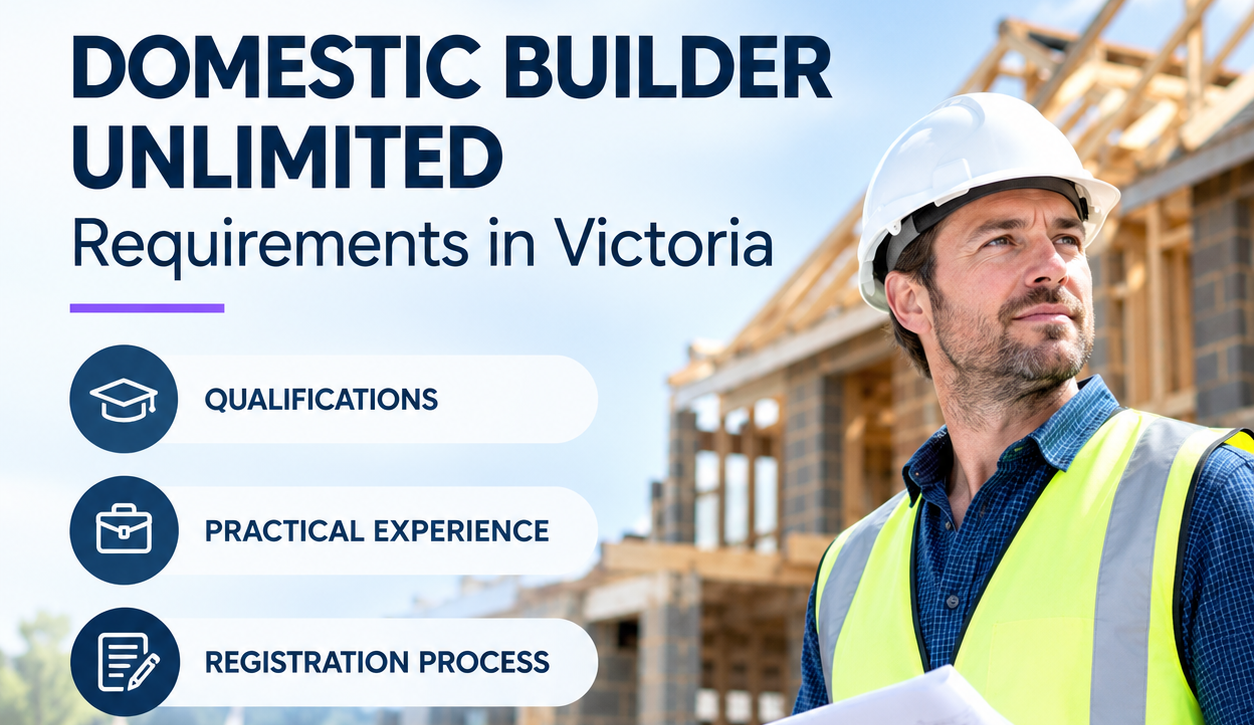
Domestic Builder Unlimited Requirements: What Do You Need?
Applicants generally need to consider several areas before pursuing Domestic Builder Unlimited registration. These include relevant qualifications, practical industry experience, evidence of competency and any required assessment or examination.
1. Relevant Qualifications
Your educational background can play an important role in your registration application. Depending on the current pathway and your circumstances, you may need to demonstrate relevant building knowledge through recognised qualifications or other accepted evidence of competency.
Training may cover areas such as:
- Building construction methods and practices
- Reading and interpreting building plans
- Building regulations and compliance
- Construction safety and site management
- Contract administration and project planning
- Structural principles relevant to domestic construction
Before enrolling in a course, check whether the qualification is recognised for your intended registration category. Completing a course does not automatically guarantee registration, as the regulator assesses applications against the applicable requirements.
2. Practical Building Experience
Construction experience is another important consideration. Builders need more than theoretical knowledge to manage projects responsibly. They must understand how work progresses on site, how trades coordinate and how building issues are identified and resolved.
Relevant experience may involve supervising construction activities, coordinating subcontractors, checking workmanship, interpreting plans and managing project documentation. The specific experience and evidence required depend on the current registration pathway.
Keep records of your work history, responsibilities and completed projects where possible. These records may help you explain the nature of your experience when preparing an application.
If you are unsure whether your background meets the requirements, review the current BPC guidance before committing time and money to the application process.
3. Understanding Building Legislation
A registered builder must understand the legal responsibilities associated with domestic construction. This includes relevant building legislation, regulatory obligations, contracts and consumer protections.
The Domestic Building Contracts Act 1995 is particularly important for understanding domestic building contracts in Victoria. Applicants preparing for the DBU exam should develop a clear understanding of the Act’s purpose and how its requirements relate to building work and contractual responsibilities.
Rather than memorising isolated facts, focus on understanding how legislation applies to practical situations. For example, consider how a builder should approach contract documentation, communicate with a client or respond when a project requirement changes.
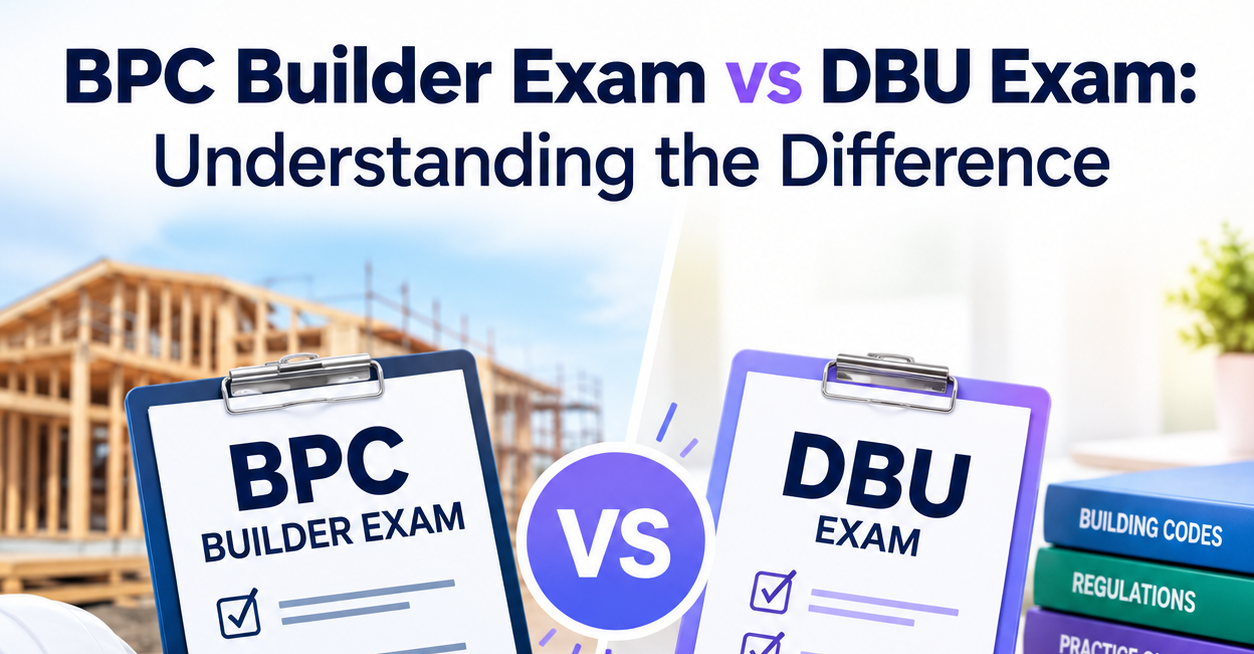
What Is the BPC Exam, and How Can You Prepare?
Depending on the applicable registration pathway, applicants may need to complete an examination or assessment to demonstrate their knowledge and competency. Always check the current BPC requirements to confirm which assessments apply to your circumstances.
For candidates who need to prepare for the DBU exam in Victoria, a structured study plan can make a significant difference. Trying to study every topic at once can feel overwhelming, particularly when balancing preparation with work and other commitments.
A Practical DBU Licence Exam Preparation Plan
Start by understanding the exam topics. Identify the subjects you need to study and divide them into manageable sections. Give additional attention to topics you find difficult.
Practise with exam-style questions. Practice questions help you apply concepts rather than simply recognise definitions. They can also reveal gaps in your understanding.
Review incorrect answers carefully. Do not move on immediately after getting a question wrong. Read the explanation, revisit the relevant concept and try a similar question.
Use mock exams to assess progress. Timed practice can help you become more comfortable with the examination format and identify areas that need further revision.
Connect theory with real building situations. Where possible, relate legislation, construction principles and contract requirements to practical examples. This can make complex topics easier to understand and remember.
How DBU Prep Can Help
DBU Prep provides exam preparation resources for aspiring Domestic Builder Unlimited candidates in Victoria. Its learning materials include practice questions, mock exams and explanations to help learners review key concepts and identify areas for improvement.
Using a dedicated preparation resource can help you organise your study routine and practise applying building knowledge. However, exam preparation is only one part of the broader registration journey. Candidates should also review the regulator’s current requirements for qualifications, experience, supporting documents and assessment.
Explore the DBU Prep practice exam to practise relevant questions and build familiarity with exam-style scenarios.
How to Apply for Domestic Builder Unlimited Registration in Victoria
Although the exact process depends on the current requirements, applicants can take a few practical steps to prepare.
- Confirm the correct registration category. Check that Domestic Builder Unlimited matches the type of domestic building work you intend to undertake.
- Review the eligibility criteria. Read the latest BPC guidance on qualifications, experience and competency requirements.
- Prepare supporting evidence. Organise relevant qualification records, work history and other documents requested by the regulator.
- Complete any required assessments. Confirm which examinations or competency assessments apply to your application.
- Submit your application correctly. Follow the regulator’s instructions and respond to any requests for additional information.
Avoid relying solely on old articles, forum discussions or advice intended for a different registration category. Requirements and administrative processes may change, so current official guidance should remain your main reference.
Domestic Builder Limited vs Unlimited: What Is the Difference?
Domestic Builder Limited and Domestic Builder Unlimited are different registration categories. Their permitted scopes of work are not interchangeable, so it is important to understand the relevant restrictions before choosing a pathway.
The right category depends on the work you intend to undertake and the registration requirements you meet. Do not assume that a limited registration automatically provides the same authority as an unlimited category.
Review the current BPC descriptions of both categories and consider how each aligns with your qualifications, experience and future business plans.
Final Thoughts
Meeting the Domestic Builder Unlimited requirements involves more than passing an exam. You need to understand the registration pathway, demonstrate the required knowledge and experience, and prepare the evidence requested by the regulator.
Start by checking the latest BPC guidance, then build a realistic preparation schedule around your knowledge gaps. If an examination applies to your pathway, consistent practice and reviewing explanations can help you approach it with greater confidence.
DBU Prep can support your study with practice questions, mock exams and learning resources, helping you prepare for the examination while you work towards your building practitioner registration goals in Victoria.
Frequently Asked Questions
1. What are the Domestic Builder Unlimited requirements in Victoria?
Requirements depend on the current registration pathway and may include relevant qualifications, practical experience, evidence of competency and applicable assessments. Confirm the latest criteria with the Building and Plumbing Commission.
2. Do I need qualifications to become a registered builder in Victoria?
Relevant qualifications or other accepted evidence of competency may be required, depending on the registration category and pathway. Check the current regulator guidance before selecting a course.
3. What is the BPC exam?
The term refers to an examination associated with building practitioner registration requirements where applicable. Candidates should confirm the current assessment requirements for their intended registration category directly with the BPC.
4. How can I prepare for the DBU exam in Victoria?
Review the required topics, practise exam-style questions, study explanations for incorrect answers and use mock exams to identify knowledge gaps. DBU Prep offers resources to support this preparation.
5. What is the Domestic Building Contracts Act 1995?
It is Victorian legislation concerning domestic building contracts. Understanding its purpose and relevant obligations can help candidates prepare for applicable building registration assessments and understand contractual responsibilities.
6. What is the difference between Domestic Builder Limited and Domestic Builder Unlimited?
They are separate registration categories with different permitted scopes of work. Check the current BPC guidance to determine which category fits your intended work and eligibility.
7. Does passing the DBU exam guarantee registration?
No. Passing an applicable examination does not necessarily guarantee registration. Applicants must satisfy all relevant requirements and have their application assessed by the regulator.